01
Risk assessment
After consulting various sources—such as the avalanche bulletin—or conducting a field survey (perceive part), the avalanche commission member must be able to outline a comprehensive overview of the situation. Based on this, an assessment of the current scenario is developed—potentially through a collective process in consultation with other members—to determine the actual existence of an avalanche risk (assess part).
Experience shows that defining threshold values is highly effective in practice. These thresholds can significantly facilitate the assessment of the snow conditions and allow for a connection to be established with known historical events, thereby justifying the assessment in case of uncertainty.
Examples of such threshold values include:
- Amount of new snow
- Rainfall
- Wind
- Temperature rise
- Avalanche danger level (European scale)
When certain threshold values are exceeded, it is essential to determine whether a typical avalanche problem may arise and if, consequently, an acute risk exists for the affected area.
In evaluating the existence of a typical avalanche problem, the primary goal is to estimate the degree of avalanche risk as accurately and professionally as possible. Regarding risk assessment, however, the main issue is that no expert can perform such an evaluation with 100% certainty. Despite this challenging starting point, the avalanche commission must strive to make the best use of collective experience, local knowledge, and individual technical expertise to assess the risk correctly.
Whether people or assets are actually at risk, and where and when an avalanche event can be expected, depends on individual assessments that must synthesize all observed aspects. Concerning the local assessment of avalanche danger and the resulting risk to people and assets, it is crucial to systematically address the key criteria and the relevant questions within the decision-making process.
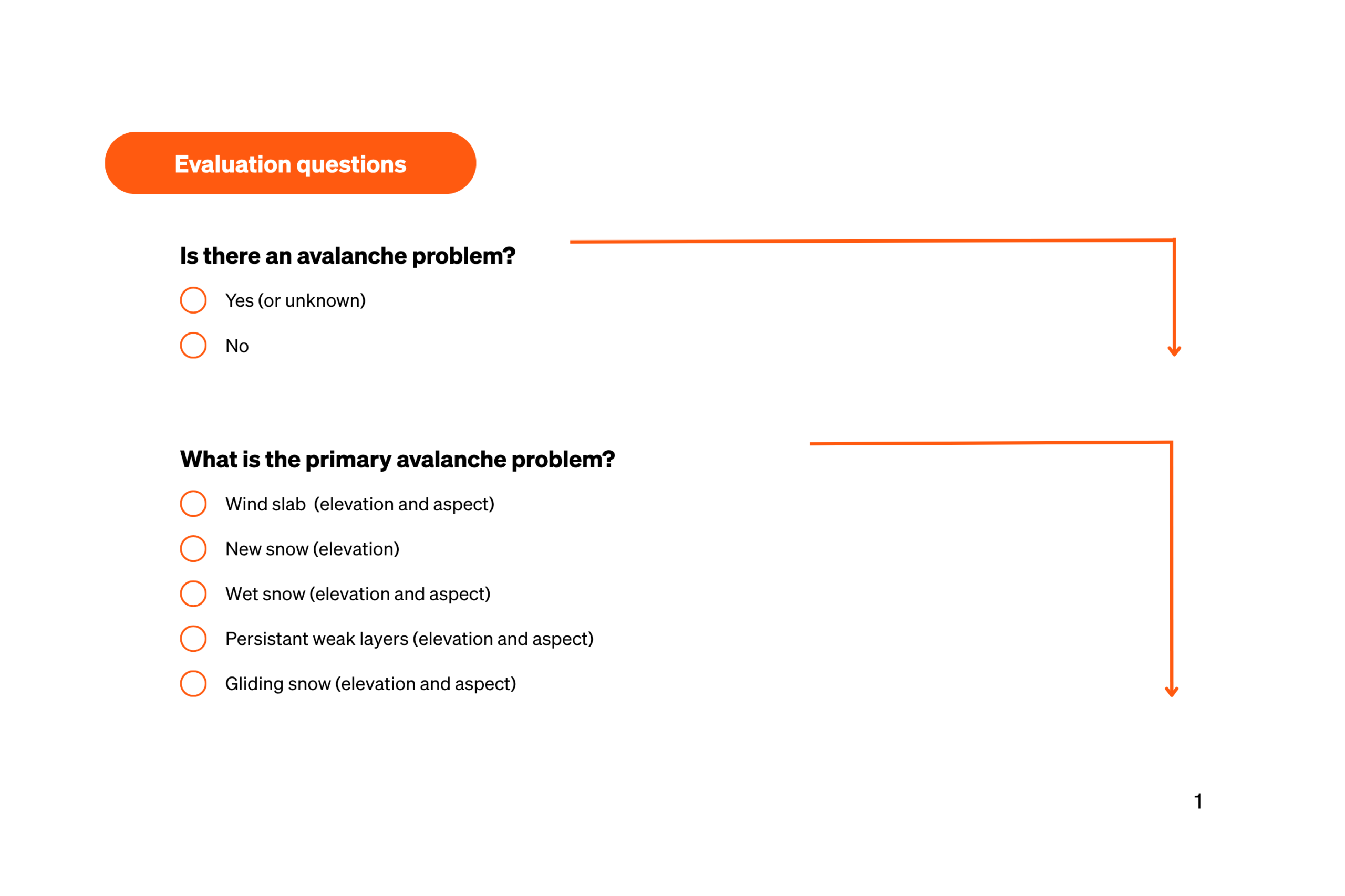
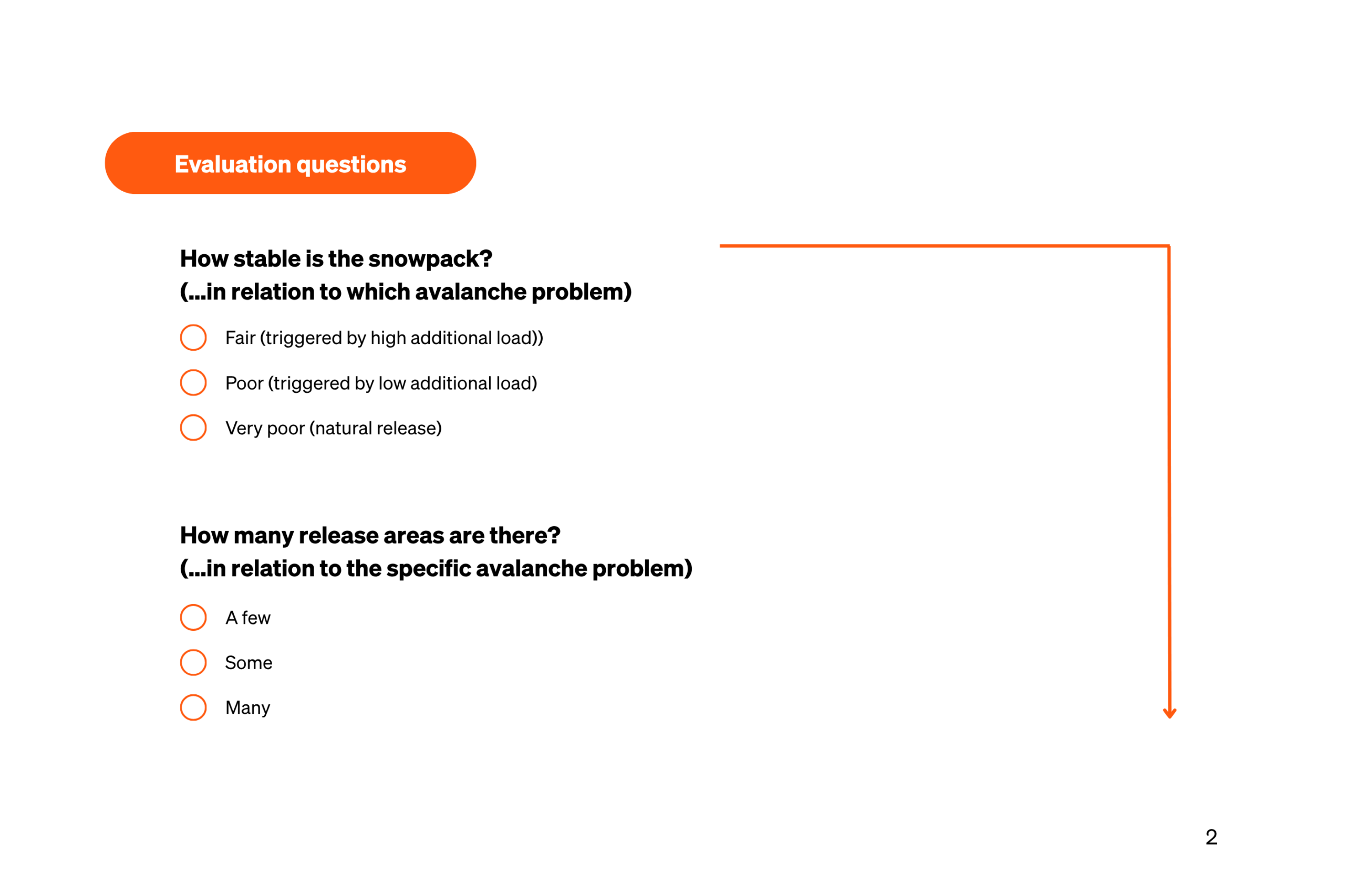
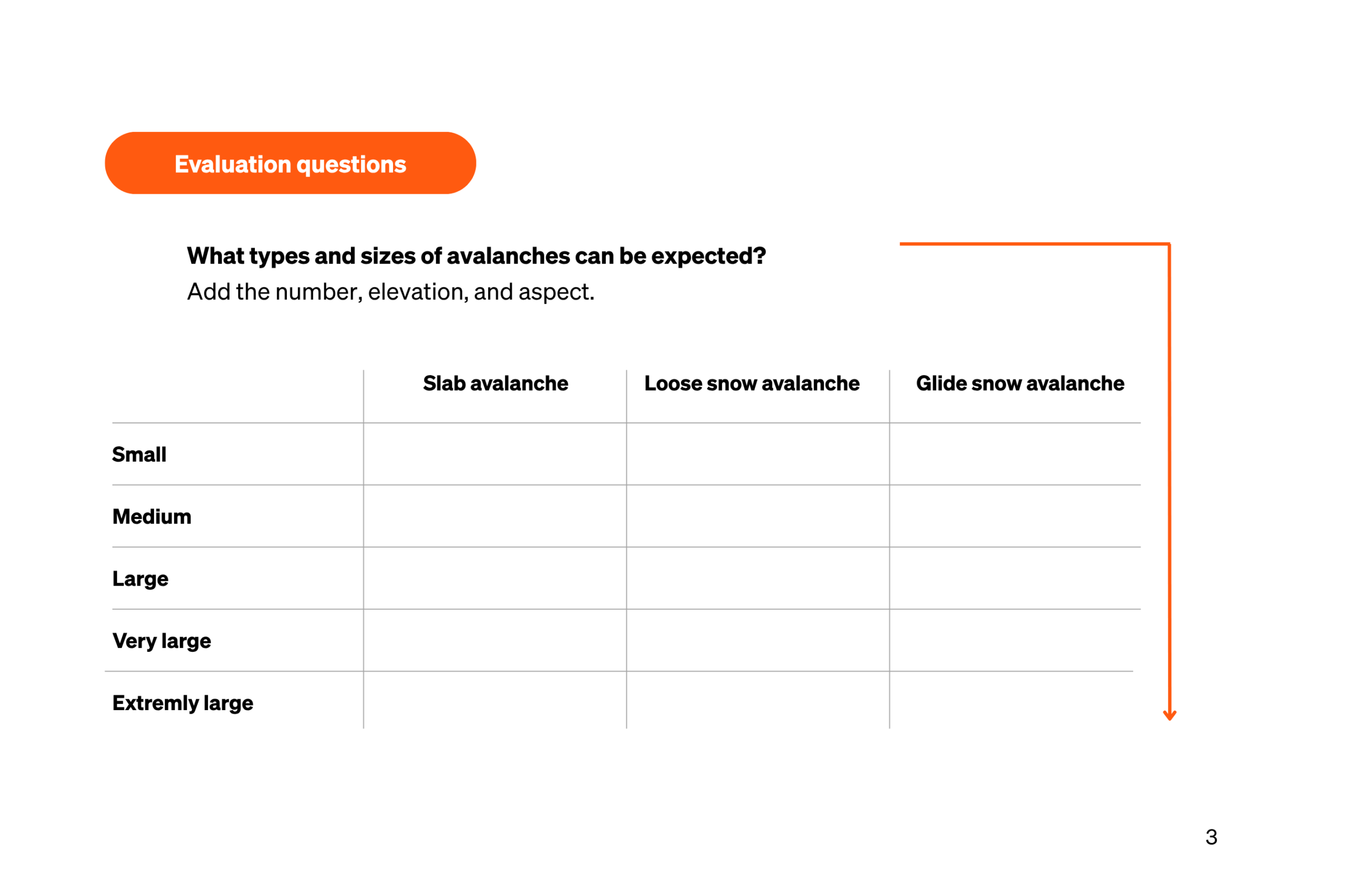
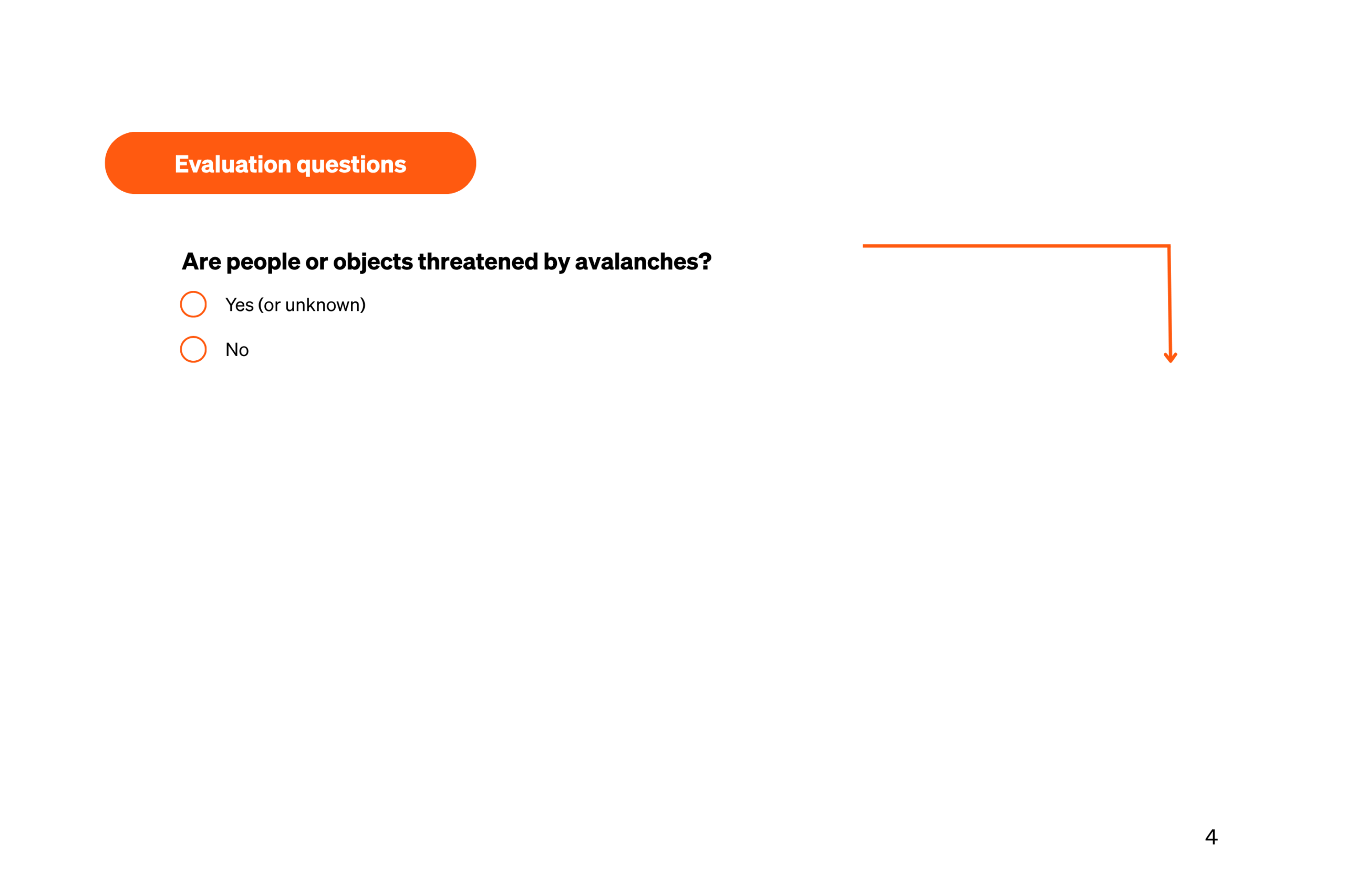
The following illustrates schematically how the logical process for avalanche risk assessment can be applied.
02
Assessment workflow
In the workflow presented, clearly distinguishing the individual assessment steps is of central importance. All questions – except for the final one – focus on the general evaluation of the local avalanche danger, this involves interpreting the snowpack, its stability, and thus the potential for possible avalanche releases. It also includes assessing the potential size and extent of such avalanches.
The final question in the assessment process, however, concerns the concrete exposure of people or assets and therefore the actual evaluation of avalanche risk. If this question is answered with YES, avalanche commissions are subsequently required to recommend suitable measures or combinations or measures to the decision-makers.
All observations and impressions in the field should therefore always be aimed at enabling a well-founded answer to this crucial question.
Cover photo: Cover Picture © Land Tirol, Hörmann | snow institute