The difference between secured and unsecured ski areas

26.06.2023

The secured ski area includes ski slopes and ski routes that are prepared by the ski area operator and protected from alpine dangers. In contrast, there is the unsecured ski area (also known as free ski area), which includes all areas away from ski slopes and ski routes and involves higher risks.

This article is about:

ATTENTION:

This article covers the differences between secured and unsecured ski areas in the European Alps. Please note that the situation may differ in your country (e. g. North America) - feel free to research further or contact us for additional information.

01

Secured ski area: ski slopes and ski routes

A ski slope is a ski run prepared by the ski resort operator and protected from hazards (e.g. avalanches, falling rocks). Ski slopes are divided into three (in some places four) levels of difficulty. These are indicated on the slope markings or on the slope map.

  • The piste markings are always on the outer edge of the piste.

They are marked according to difficulty with the colors green (very easy), blue (easy), red (medium), black (difficult) and have a number, which allows orientation by means of a slope plan (map).

Like a ski slope, a ski route is part of the organized ski area and is characterized by a lack of grooming and usually by a challenging route. It is a marked ski run that is not controlled by the ski area staff. As a rule, there is no danger of avalanches here unless the ski route is closed.

  • A ski route is always marked in the middle of the descent.

ATTENTION: Ski slopes and ski routes are only considered secured if they are open.

02

Unsecured ski room: free ski room, off-piste runs

The term free ski area refers to all areas away from ski slopes and ski routes.

  • The open ski area is neither marked, groomed nor controlled, nor is it protected from alpine dangers.

Skiing in open terrain involves higher risks than skiing on groomed slopes, as there may be unexpected obstacles or dangers such as rocks, trees and avalanches. It can also be more difficult to be rescued in the event of an accident.

It is important that skiers and snowboarders who are out and about in the open ski area are well prepared and equipped with the necessary equipment to minimize the risks and ensure their safety. You should also be aware that skiing in the open ski area is at your own risk. This means that you are responsible for your own actions and decisions.

The boundaries between the secured ski area and the unsecured ski area are often difficult to recognize. In principle, however, the following applies: as soon as a slope or an area is no longer marked with the above-mentioned markings and is therefore no longer secured, you are in an unsecured ski area.

TAKE AWAY: You are in the open ski area as soon as you ski beyond the edge of the piste or are five meters to the left and right outside the marking of a ski route.

The free ski area also includes off-piste runs that lead away from a piste and back into the organized ski area further down the valley. The following or similar signs are often used in ski areas to indicate the boundary:

© snow institute I LWD Tirol
03

Avalanche protection in the ski area

Every ski area has an avalanche commission. An avalanche commission is a group of experts who are responsible for assessing avalanche hazards in a particular area. Its main task is to monitor the current snow situation and weather conditions in order to identify potential avalanche hazards and take appropriate measures to minimize the risk to the population and infrastructure.

The avalanche commission also makes decisions about closing slopes and roads and about carrying out avalanche blasting in order to ensure safety. The members of the avalanche commission check the catchment areas of the ski slopes daily for signs of avalanche danger and take appropriate measures to minimize the risk as much as possible.

In order to take preventative measures, structural measures such as avalanche rakes (also known as avalanche barriers), avalanche dams and avalanche galleries are built. Ski areas are temporarily secured by means of artificial avalanche triggering.

Structural protection against avalanches:

Structural avalanche protection refers to the construction of protective devices to protect buildings, infrastructure and also ski slope users from the effects of avalanches. These measures are intended to minimize or prevent damage caused by avalanches.

Commencement shoring © snow institute I LWD Tirol

Artificial avalanche triggering through avalanche blasting:

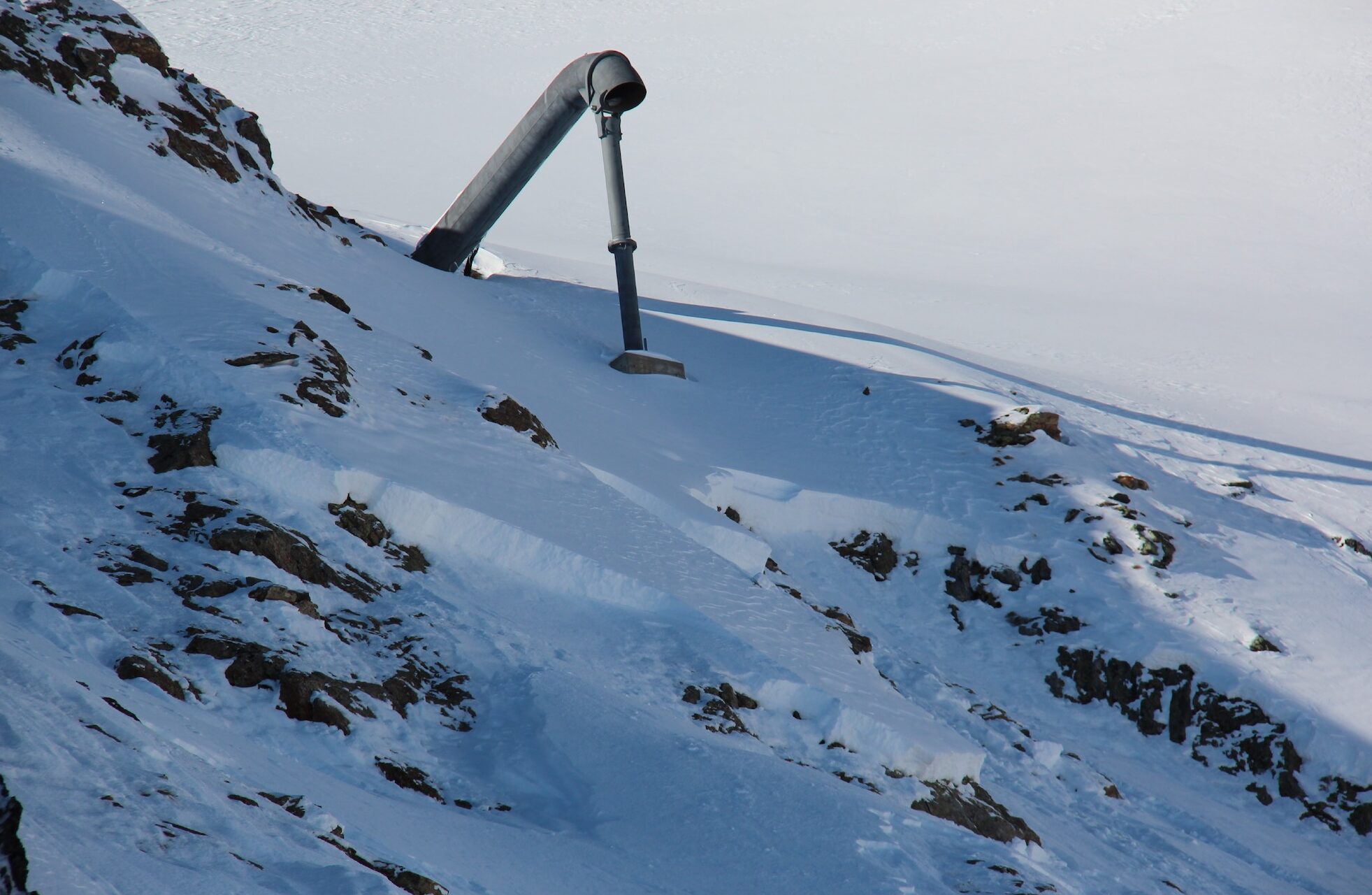
Avalanche blasting is the controlled triggering of an avalanche. It is very suitable for the temporary protection of ski areas and ski slopes. Experts know exactly where potential trigger points are located and at what time they need to carry out the blasting in order to achieve success. In this case, success means triggering an avalanche in a controlled manner.

Cover picture: © snow institute | LWD Tirol