
This article is about:
01
Vulnerability and exposure
The task of an avalanche commission is to assess the avalanche risk within the municipality under its jurisdiction and, based on these assessments, to propose a range of measures to the mayor or other decision-makers. These measures aim to reduce the exposure of people and vulnerable assets to avalanche hazards and thus to mitigate the overall risk.
Exposure refers to all elements that may be directly or indirectly affected by the impact of a potential avalanche, while vulnerability describes the likelihood that these elements will suffer material or immaterial damage as a result of such an event.
A comprehensive assessment of the components of exposure and vulnerability requires consideration of all related factors:
- Individuals and the general population: residents, tourists, workers, and temporarily present people, including those merely passing through the area;
- Population density in potentially hazardous areas: the number of inhabitants in a given settlement as well as the number of people on ski slopes, in mountain huts and parking areas, on mountain roads, or along winter hiking trails;
- Frequency of infrastructure use and its strategic importance: highways, railway lines, key road connections between regions, ski runs, ski slopes linking multiple ski areas, overhead power lines, radio signal transmitters, and other critical infrastructure;
- Economic value of assets: residential buildings, hotels, sports facilities, and commercial activities;
- Construction type of buildings and infrastructure and the potential presence of structural measures to reduce vulnerability: location in relation to the avalanche path, structural reinforcements, anchoring, and other active or passive protective measures.
The dynamics of exposure and vulnerability can change and evolve over the time. This may occur, for instance, as a result of urban development in alpine areas, the construction of new infrastructure leading to increase in the number of exposed people, the use of avalanche blasting, and the implementation of new protective structures aimed at mitigating risk.
See articles:
-
Act – Measures: Artificial Avalanche Triggering
- Permanent Avalanche Protection
-
Spatial planning instruments
Exposure can also vary significantly over short periods of time. This is evident, for example, in the increase in tourist flows during the winter season or in specific dynamics that lead to high concentrations of people in the same location during certain time windows.
02
Measures (advisory recommondation for decision – makers)
In the EUREGIO Tyrol – South Tyrol – Trentino, and frequently beyond it, the mayor assumes the role of the highest civil protection authority at the municipal level. Accordingly, it is also his responsibility to take the necessary measures to protect public safety and to ensure the safety of the population within the municipal territory.
The primary task of the avalanche commission therefore does not lie in the organization or the direct implementation of measures, but rather in providing expert advice and support to the mayor by outlining possible courses of action. This advisory role is thus to be understood as the commission’s “action” or as the taking of measures on their part.
Avalanche commissions have a broad range of measures at their disposal, with particular emphasis on those aimed at reducing exposure and vulnerability. These measures are proposed to the decision-maker as a basis for issuing specific directives.
In practice, the measures proposed by an avalanche commission are generally adopted by the mayor as such. These recommendations are consequently translated into concrete orders, which may in particular include the following contents (possible types of measures):
- Traffic, access, and presence pans: establishment of partial or total bans through the temporary closure of infrastructure, facilities, transport routes, and a wide range of businesses or operations;
- Evacuation orders: evacuation of areas, settlements, or individual buildings that are permanently or temporarily used by people;
- Escorted evacuation: coordinated transfer of people to safe locations or to prepared emergency shelters;
- Temporary stay in protected areas: obligation for the population to remain in safe indoor spaces or designated shelters;
- Management and technical measures: implementation of measures to restore safety and/or reduce risk, such as the artificial triggering of avalanches or other stabilization techniques, carried out either within the framework of planned measures (e.g. protection of emergency plans), or as targeted, ad hoc interventions;
- Restrictions in open terrain: prohibition of access to or engagement in certain sporting activities (e.g. hiking, ski touring, off-piste skiing) in designated areas, particularly in avalanche release zones and their runout areas that may potentially affect settlements or anthropogenic areas.
The measures issued by the mayor must therefore, in particular, include the following elements:
- A precise explanation of the nivometeorological conditions and the stability of the snowpack as justification of the measures;
- Reference to all records prepared by the avalanche commission for the respective recommendation, including observations and assessments;
- Reference to the recommendations issued by the avalanche commission regarding the content of the measure or, where such a recommendation is not available, a justification for why it was not obtained or why it was unavailable;
- Clear identification of the affected zones and buildings;
- Description of the technical procedures for implementing the ordered measures; in this regard, reference may be made to the municipal civil protection plan or other similar documents, if they have been formally adopted;
- A detailed justification demonstrating the appropriateness or necessity of the measure;
- A list, where appropriate categorized, of persons required to comply with the measures as well as those exempt from them (e.g. emergency services);
- Description of the effects of the imposed regulations or prohibitions;
- The period of validity of the provisions contained therein.
The lifting of the measures issued must be substantiated by a statement from the avalanche commission demonstrating that no danger persists. However, in his role as the highest civil protection authority, the mayor always retains the discretion to act according to personal judgement. It may also be the case that a measure is issued from the outset with a predefined expiry date.
Classic measures available to avalanche commissions include, for example, warning notices, closure measures, and evacuations. The artificial triggering of avalanches constitutes a specific measure in its own right and is therefore addressed separately in a dedicated article (“Act – Measures: artificial avalanche triggering”).
03
Types of Measures
Warnings
Warnings are considered so‑called “soft measures”, as they do not involve physically effective interventions—such as road closures implemented with barriers or the artificial triggering of avalanches—but are instead primarily intended to influence people’s behavior (behavior‑oriented measures). Their purpose is to strengthen risk awareness in line with the current hazard situation. Warnings can also be used to inform specific target groups or entire communities about the current assessments of the avalanche commissions and to encourage heightened attention and caution.
Such warnings have proven to be relatively simple, yet effective measures for reducing exposure and vulnerability. A categorized list of possible warnings that may be employed by avalanche commissions includes the following:
Behaviour-oriented warnings
- Avoidance of exposed outdoor areas
- Avoidance of rooms facing avalanche paths and the basement
- Relocation of sleeping areas to less exposed parts of the building
- Call for increased caution even during short journeys, e.g. between the house and the garage
Traffic and mobility warnings
- Warning of increased avalanche risk on specific road sections
- Avoid unnecessary trips or reschedule travel times
- Notice of possible short-term closures and the need for appropriately adjusted behavior
Person- and situation- specific warnings
- Targeted warnings for inhabited isolated farms or hamlets
- Information for specific facilities (e.g. schools, tourist accommodations) about increased risk
- Warnings for emergency responders or operators of critical infrastructure
Technically supported warnings
- Activation of avalanche traffic lights with visual and acoustic signals
- Automatic warning messages when avalanches are detected
- Use of sirens, loudspeaker announcements, or digital warning systems
Avalanche traffic lights represent a hybrid measure between warnings and closures in this context. On the one hand, they serve as a warning in the event of an actual avalanche release or a suspected increased avalanche risk in a specific area. On the other hand, from a practical perspective, a red light is effectively equivalent to a closure.

Closures
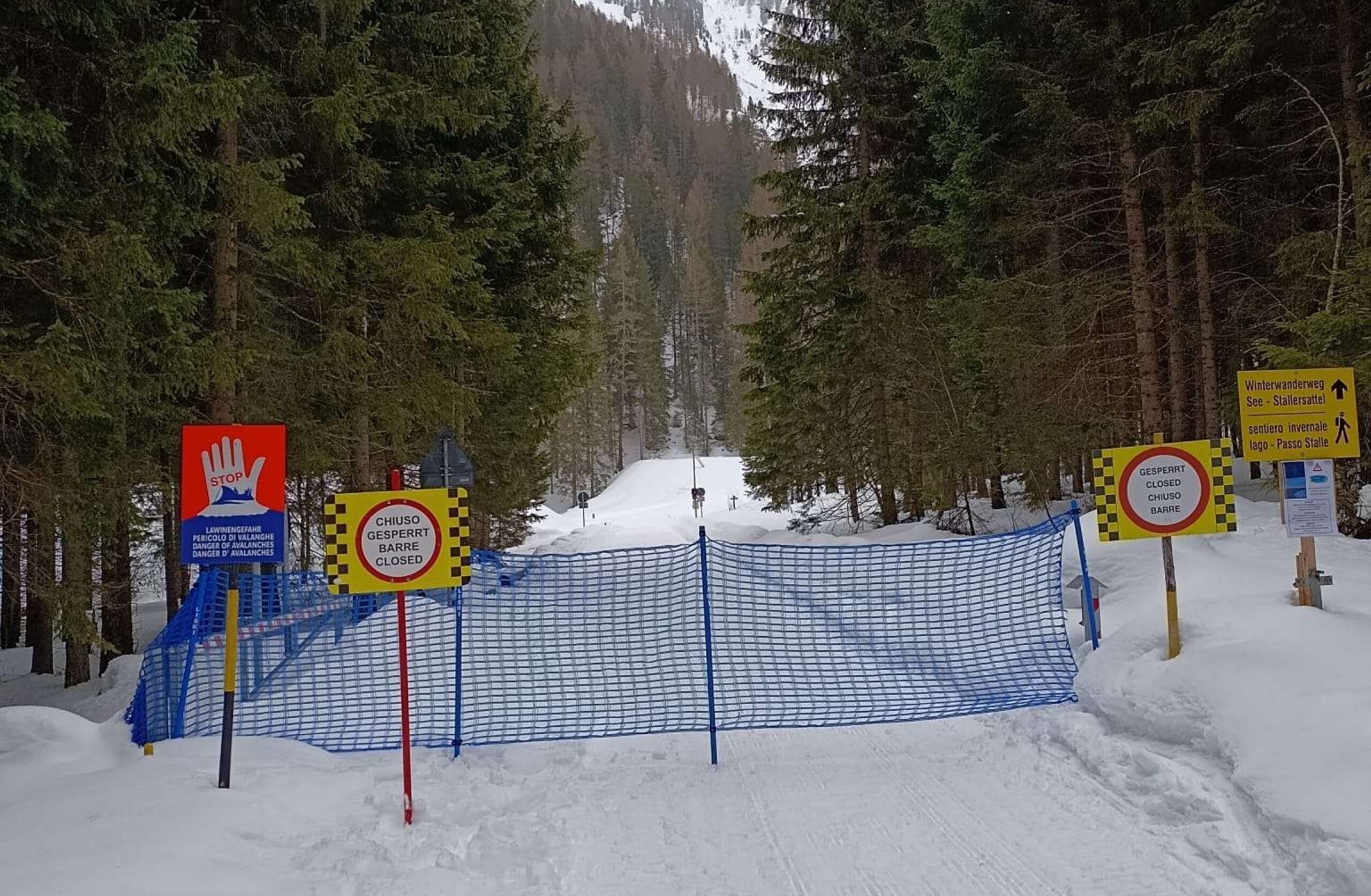
Closures represent a more restrictive measure than warnings and are often used in combination with other measures. For example, if an artificial avalanche release is carried out through controlled blasting, this is usually accompanied by the closure of a section affected by the avalanche. In most cases, these are road sections or ski slopes, or paths thereof.
When a closure is implemented as a standalone measure, its primary objective is usually to allow the avalanche to release (spontaneous release) or, if meteorological conditions permit, to assume that the snowpack will stabilize in the near future. In such cases, artificial avalanche triggering (blasting, using snowcats etc.) and thus the direct elimination of the hazard is not possible. As with all measures of this kind, timing is fundamental. Closing a road or ski slope too early prolongs the overall duration of the closure, while acting too late may result in an avalanche having already released and caused damage. Furthermore, it must be considered that closures that last too long or occur too frequently can reduce public acceptance and undermine confidence in the decisions made by the mayor based on the recommendations from the avalanche commissions.
In practice, it becomes apparent that lifting closures, rather than imposing them, poses a particular challenge. For avalanche commissions, it is crucial to be able to assess with sufficient certainty that the risk of further avalanche releases no longer exists—for example, because dangerous snow masses have already released spontaneously or because the snowpack has stabilized for the moment.
Evacuation
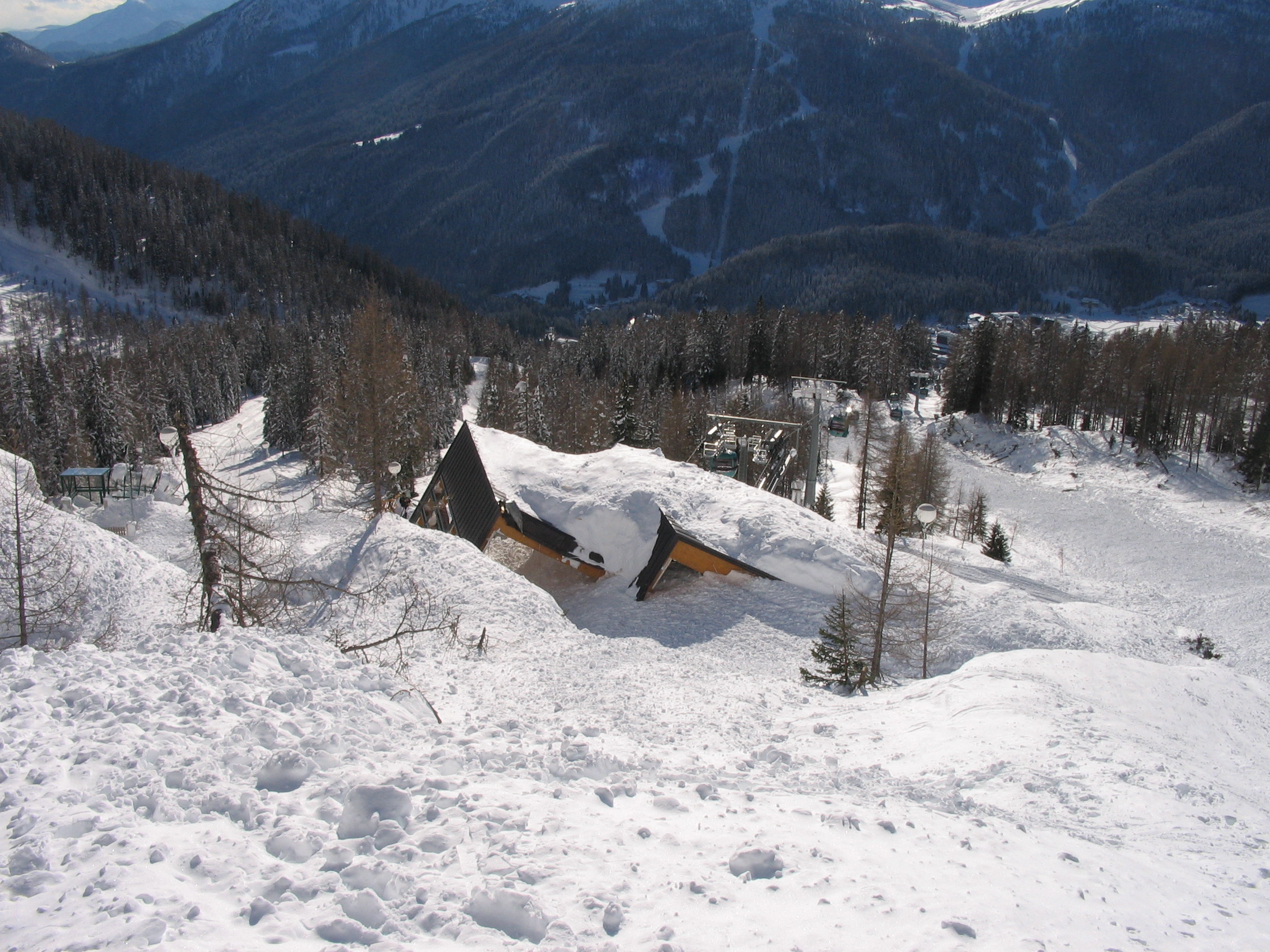
If warnings or measures are no longer sufficient as a protective measure, evacuations may be ordered to safeguard people’s safety. Such measures constitute a drastic intervention with potentially significant consequences, especially when residential buildings are affected and residents are forced to temporarily leave their own homes.
Given the seriousness of this measure, the timing of an evacuation must be chosen with utmost care. The objective is to effectively meet the necessary safety requirements while keeping the burden on the affected population as low as possible. For an avalanche commissions, it is also essential to ensure that the areas required as access and evacuation routes in the event of an evacuation are not themselves threatened by further avalanche releases.
Additional Measures
In principle, avalanche commissions can recommend a wide range of different measures, provided they serve to protect public safety. One measure that may not be considered classical is the intensive monitoring of the avalanche situation. It is non-classical in the sense that avalanche commissions do not issue a direct recommendation to decision-makers, but rather call upon themselves to take increased action. If there is uncertainty in the assessment of the avalanche situation, without concrete measures being strictly necessary at that point, the members of the avalanche commission are obliged to observe the situation more closely in an appropriate manner. This measure can therefore be understood as a call for heightened awareness within the commission itself and may also facilitate internal planning of responsibilities during such a phase. Further measures that cannot be clearly assigned to one of the three previously mentioned categories may include, for example, requiring snow-clearing vehicle drivers to carry an avalanche transceiver (beacon) on their person. It may also be stipulated that when entering a specific, potentially hazardous area, an additional person observes the other from a safe location, such as from the opposite side of the valley. The persons involved remain in continuous contact via radio or mobile phone.
The goal remains the minimization of avalanche risk; which specific measures are employed to achieve this lies within the responsibility of the competent avalanche commission.
Bibliography:
-
Procedure per la gestione delle attività di previsione, monitoraggio e sorveglianza in campo valanghivo – Documento D: Proposte di indirizzi metodologici per le strutture di Protezione Civile deputate alla gestione della problematica valanghiva nell’ambito del sistema nazionale dei Centri Funzionali. A cura di G. Tecilla, AINEVA Trento, 2007.
-
Beozzo W., Tognoni G. et al.: Quaderno di nivologia n° 26: pubblicazione di dati e informazioni di carattere nivo-meteorologico relativi alla stagione invernale 2008-’09 a cura dell’Ufficio Previsioni e Pianificazione della Provincia Autonoma di Trento, ed. 2012.