01
Generell Overview
The term permanent avalanche protection encompasses all those measures of integral avalanche protection that contribute to long-term protection against avalanches and/or the reduction of the avalanche risk in an area. Furthermore, a distinction is made between active permanent measures and passive permanent measures. Active measures prevent the release of avalanches or intervene directly in the avalanche process, and passive measures try to protect the affected objects themselves or try to reduce their hazard potential (through spatial planning instruments).
Permanent risk mitigation measures act by reducing the likelihood or consequences of hazardous events, but they cannot completely eliminate the risk. Therefore, a residual component of risk always remains (article “Acceptable and residual risk“), which is unavoidable even when technically advanced measures are in place, since an extreme event may exceed the intensity of the event considered during the design phase.
The range of different protective structures cannot, of course, be fully covered in this article. The following article tries to give a brief insight into permanent construction measures. Content about non-structural measures (e.g. spatial planning measures) are listed in the article “Spatial planning instruments”. For further technical details, the applicable reference standard is ÖNORM B4801 (Austrian standard), together with the relevant European and national sector-specific regulations and the applicable regional technical provisions.
02
Active permanent structural measures
02.1 Active permanent construction measures - Release area
Active permanent measures, which occur in the release zones of avalanches, can take on two different functions. The support of the snowpack (supporting structures) or the reduction/control of wind-induced snow transport (drift barriers / snow fences) (Rudolf-Miklau & Sauermoser, 2011). This group also includes technical gliding snow protection.
Snow supporting structures
Stabilize the snowpack up to a certain height to prevent avalanches from being released in a certain area.
Snow bridge of steel: Steel structures consisting of supports, girders and, crossbeams.
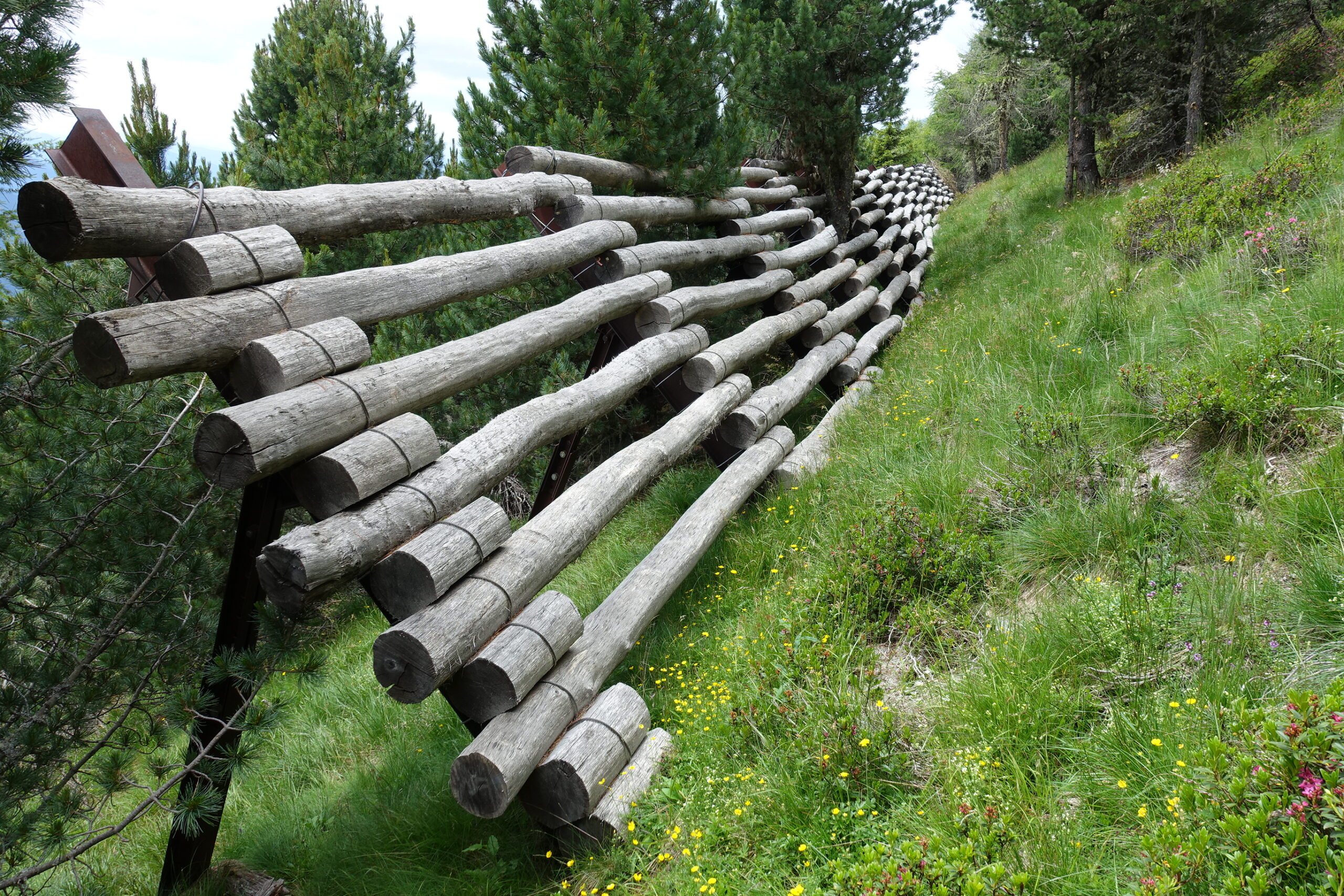
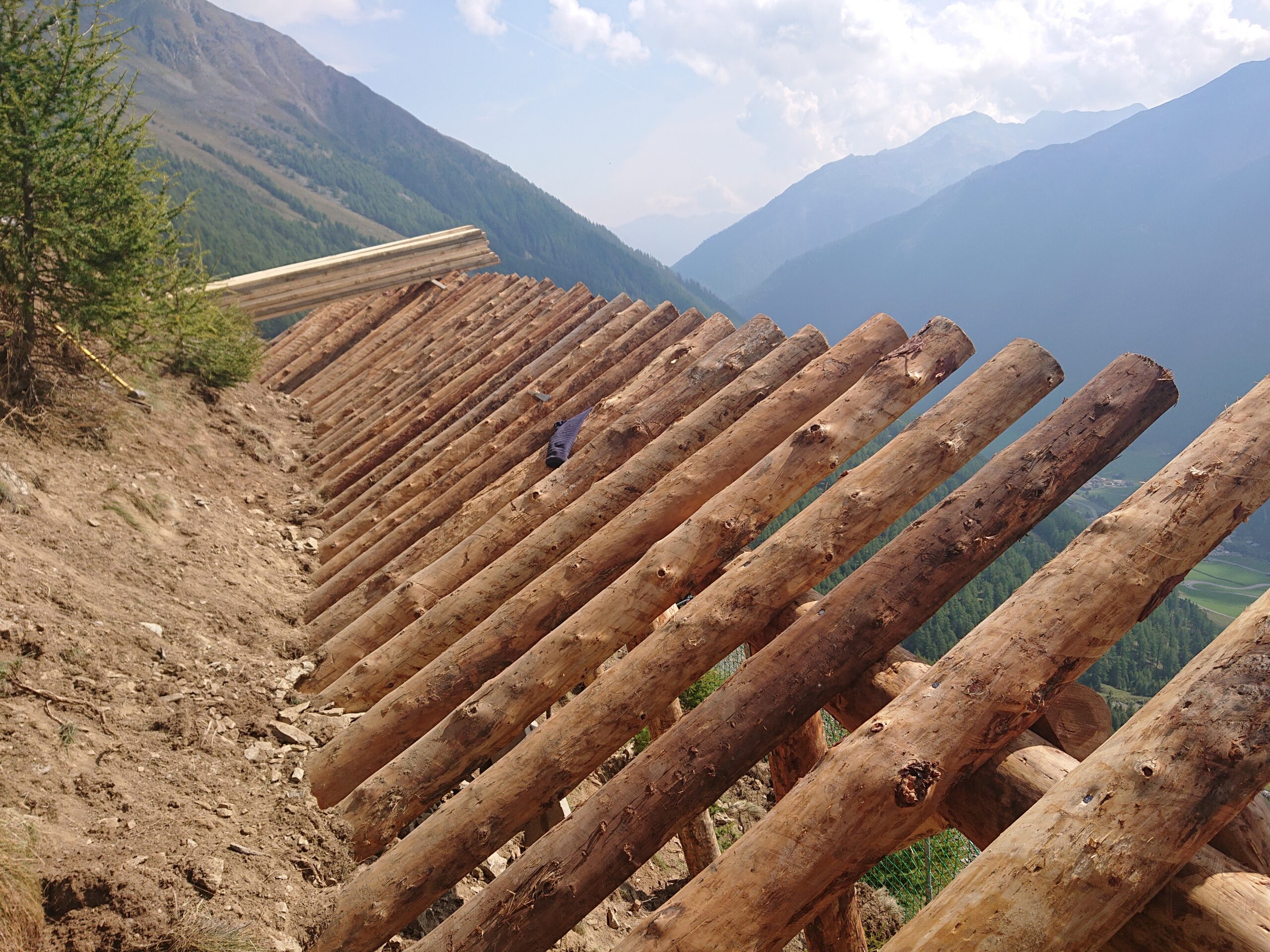
Wooden snow bridge: Wooden constructions consisting of support, girders and, log crossbeams (horizontal round timbers).
Wooden snow rakes: Wooden constructions consisting of supports, purlin and beams of gate (standing logs).
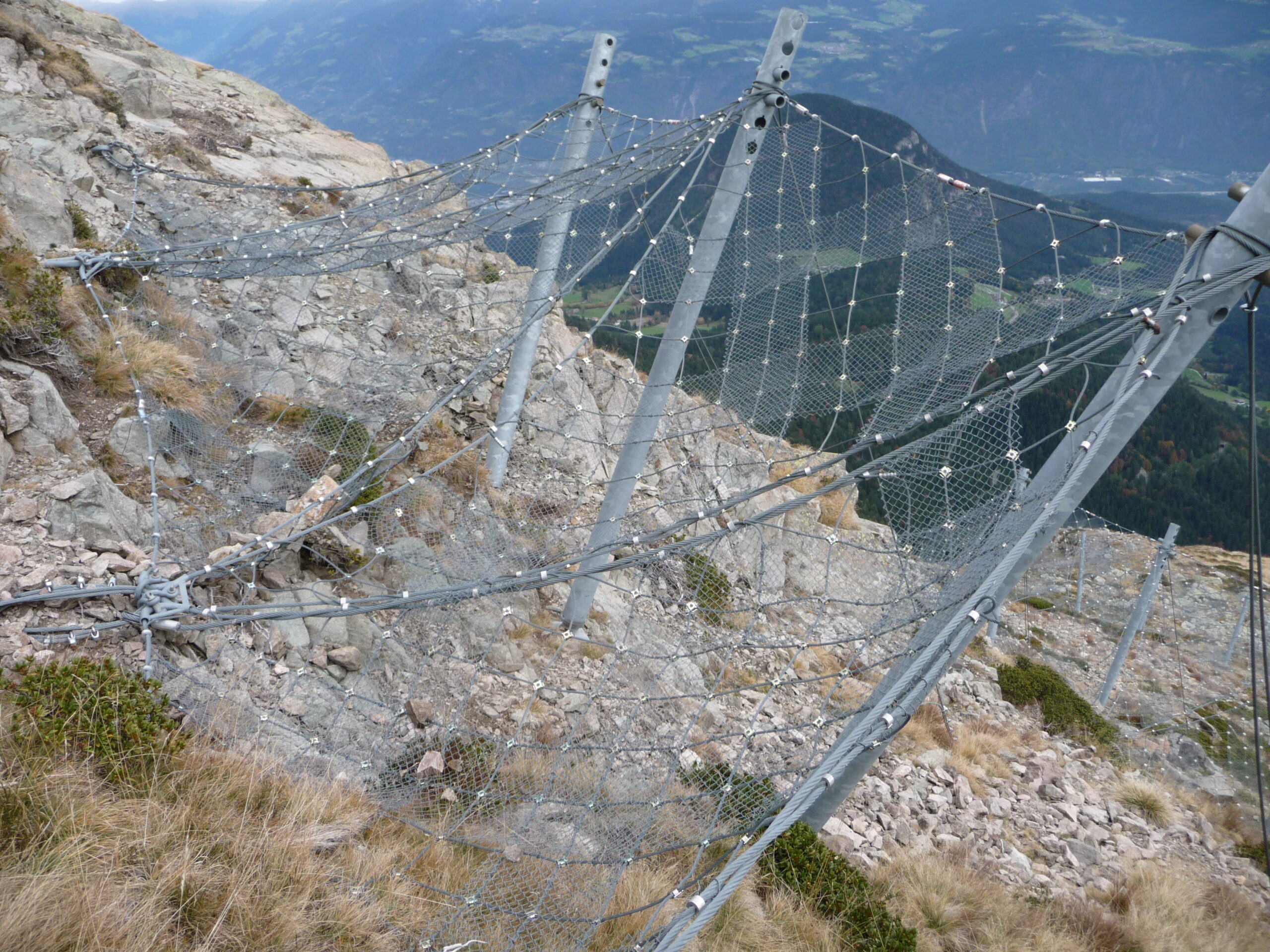
Snow net: Steel structure consisting of triangular wire rope net, post and retaining rope.
Limits:
Design at max. snow depth (filling level); structures between 2 and max. 5 m; If fill level exceeded, protective function severely limited.
Simple monitoring/control:
Filling level control; Checking for the presence of the measure itself (general condition); Deformations and damage (e.g. rock fall) and the resulting reduced protective height (Wirkungshöhe).
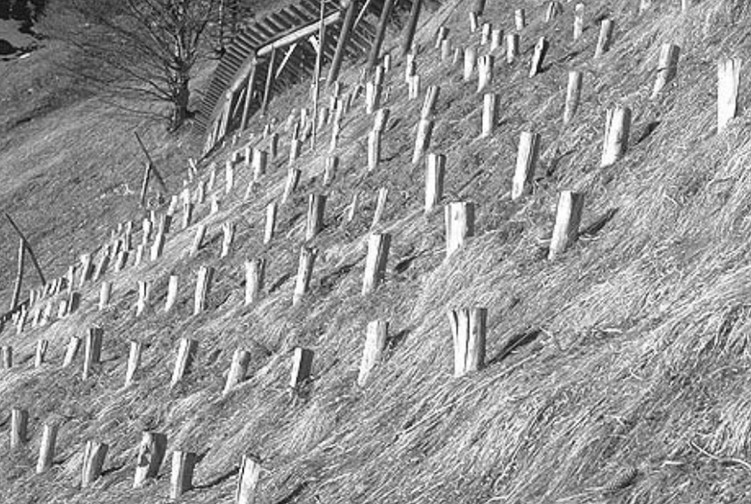
Technical gliding snow protection
Minimization of sliding and creeping of snow on steep slopes.
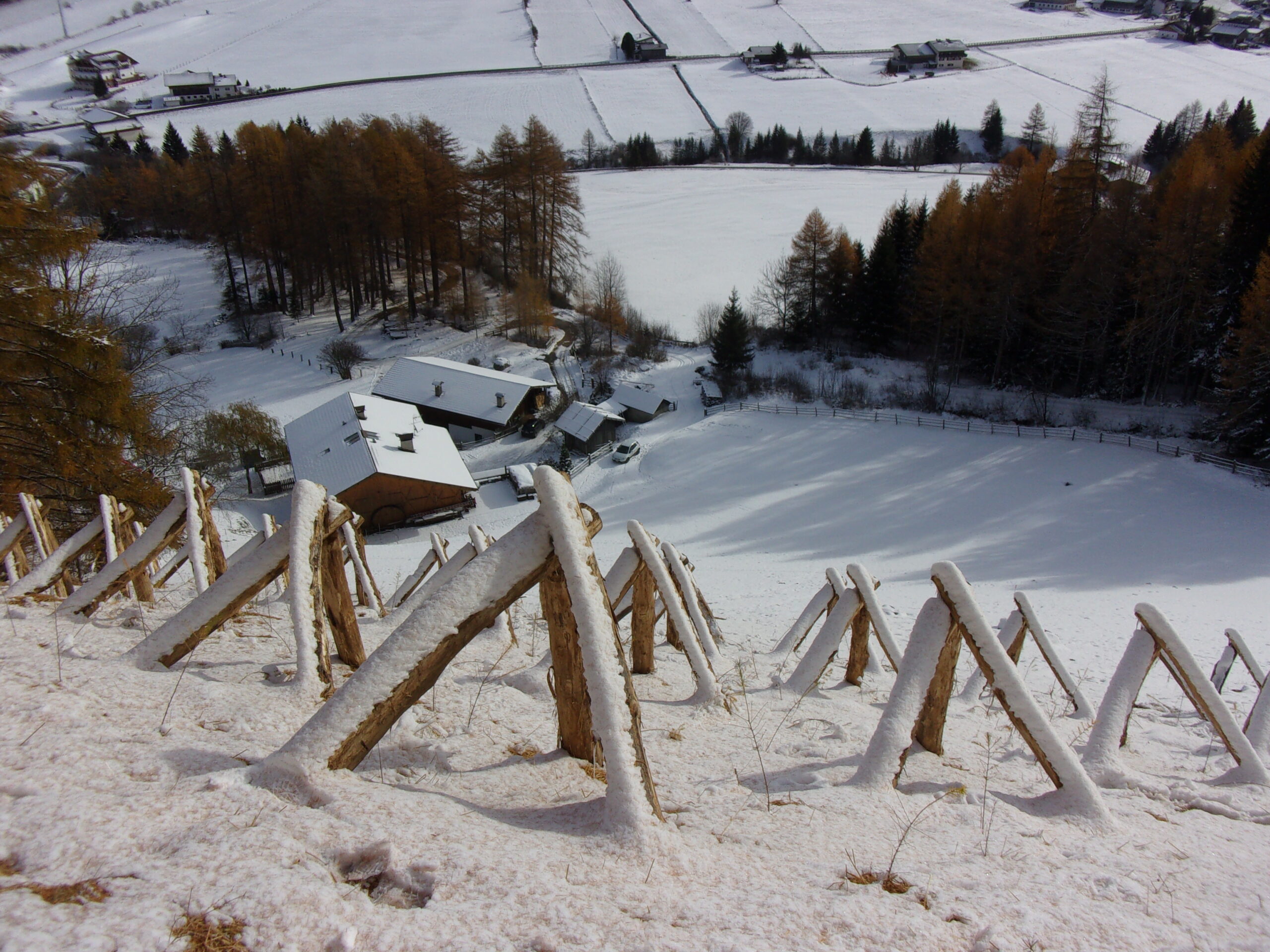
Snow glide tripods: Triangular bond of round timbers or upper timbers can also consist of half round timbers.
Berms: Earth terraces of different widths across the slope.
Array of pales: Array of pales consisting of round timbers.
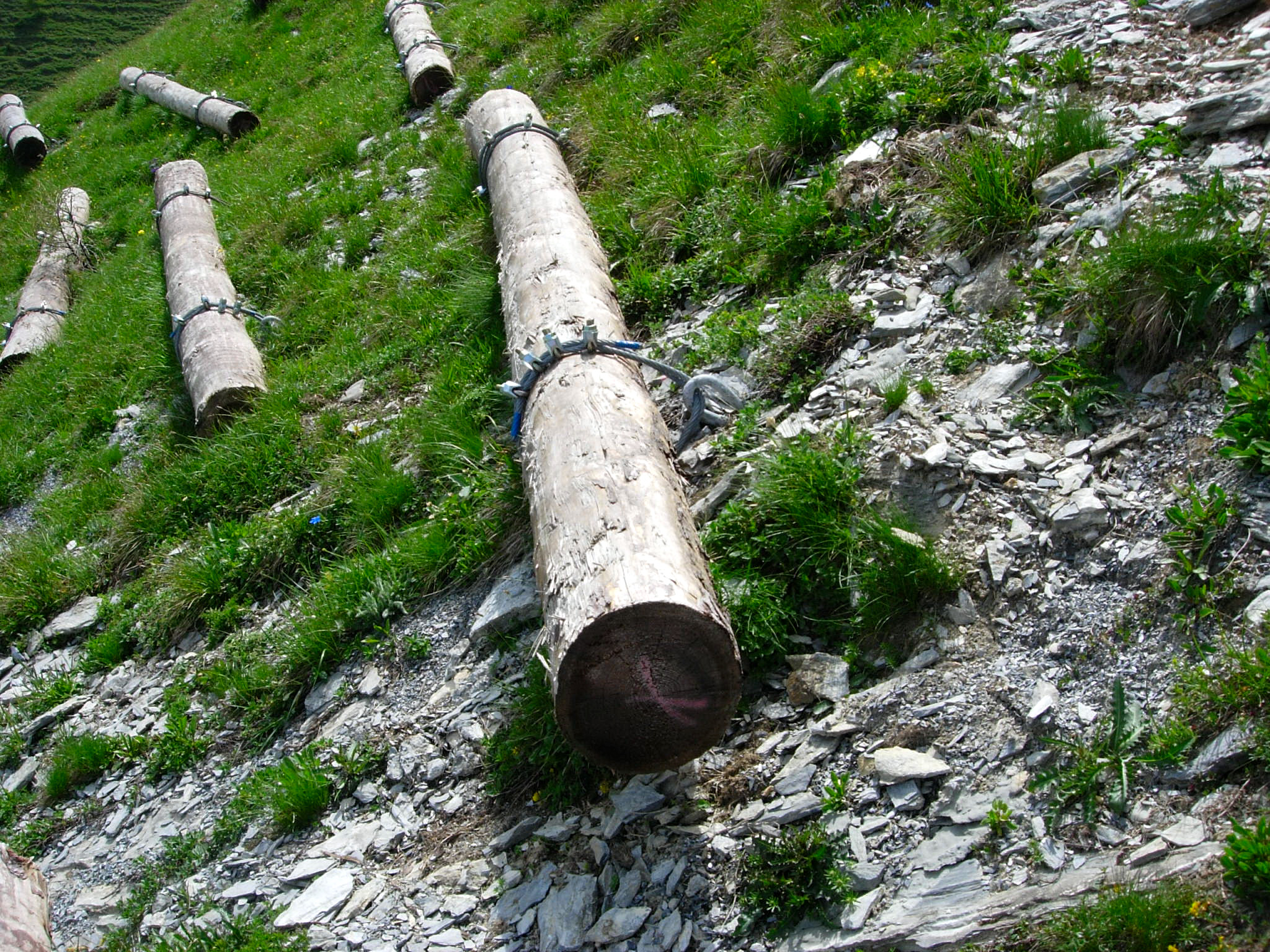
Round wood sleepers: cross-anchored tree trunks.
Limits:
The forces occurring during the creep and sliding process of the snowpack can be very large and thus damage the structures or, in extreme cases, tear them out.
Simple monitoring/control:
All listed structures used for technical glide snow protection have a low effective height. For this reason, these are relatively easily snowed over and thus monitoring/controlling them proves to be difficult. Monitoring and control during the snow-free months therefore proves to be particularly important. It is important to pay attention to the completeness of the structures, to any damage and also to the condition of the wood.
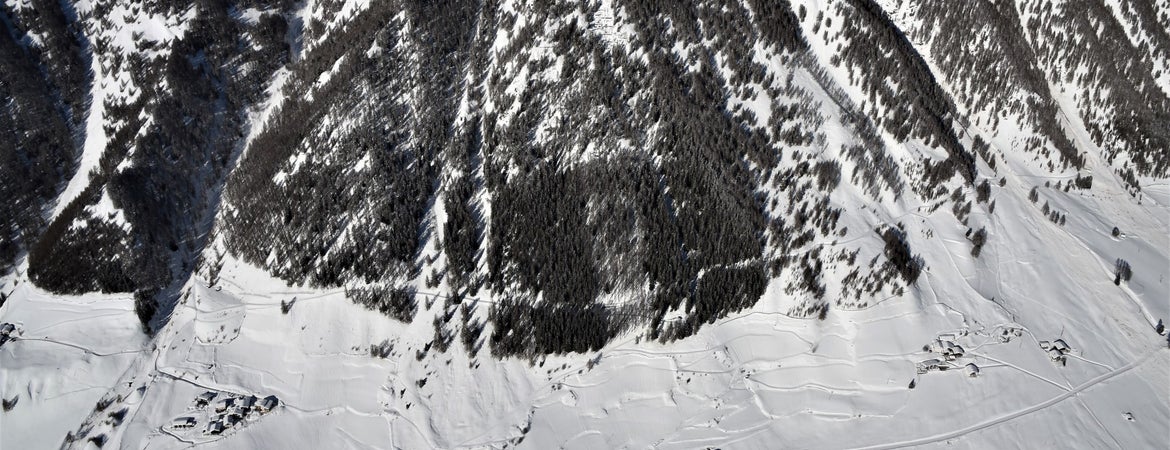
Protection forest
Although not classified as a structural measure, the protective forest should be mentioned here due to its relevance. Its function is comparable to that of avalanche control structures, namely the stabilization of the snowpack to prevent the initiation of avalanches.
Limits:
Only a healthy forest consisting of the right tree species in sufficient numbers can protect against avalanches.
Rule of thumb: Trees must exceed twice the snow depth to provide effective protection (Rudolf-Miklau & Sauermoser). Explicit evergreen species offer sufficient protection against avalanches.
Simple monitoring/control:
Monitoring the forest condition—with particular attention to bark beetle infestations. Assessing tree species composition is essential, as only evergreen species provide optimal protection. Ensuring adequate tree density is crucial; gaps in the tree population must be identified and addressed.
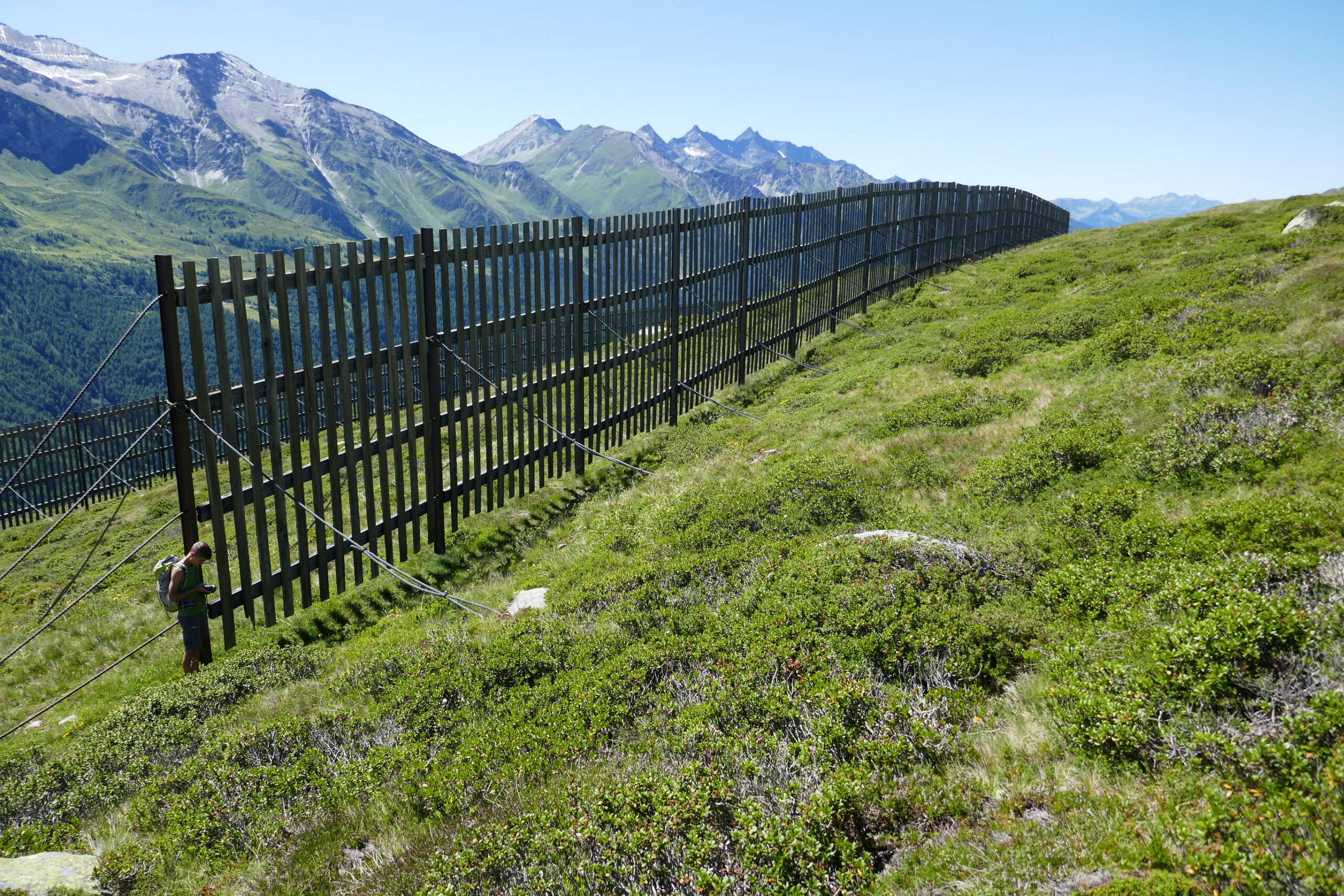
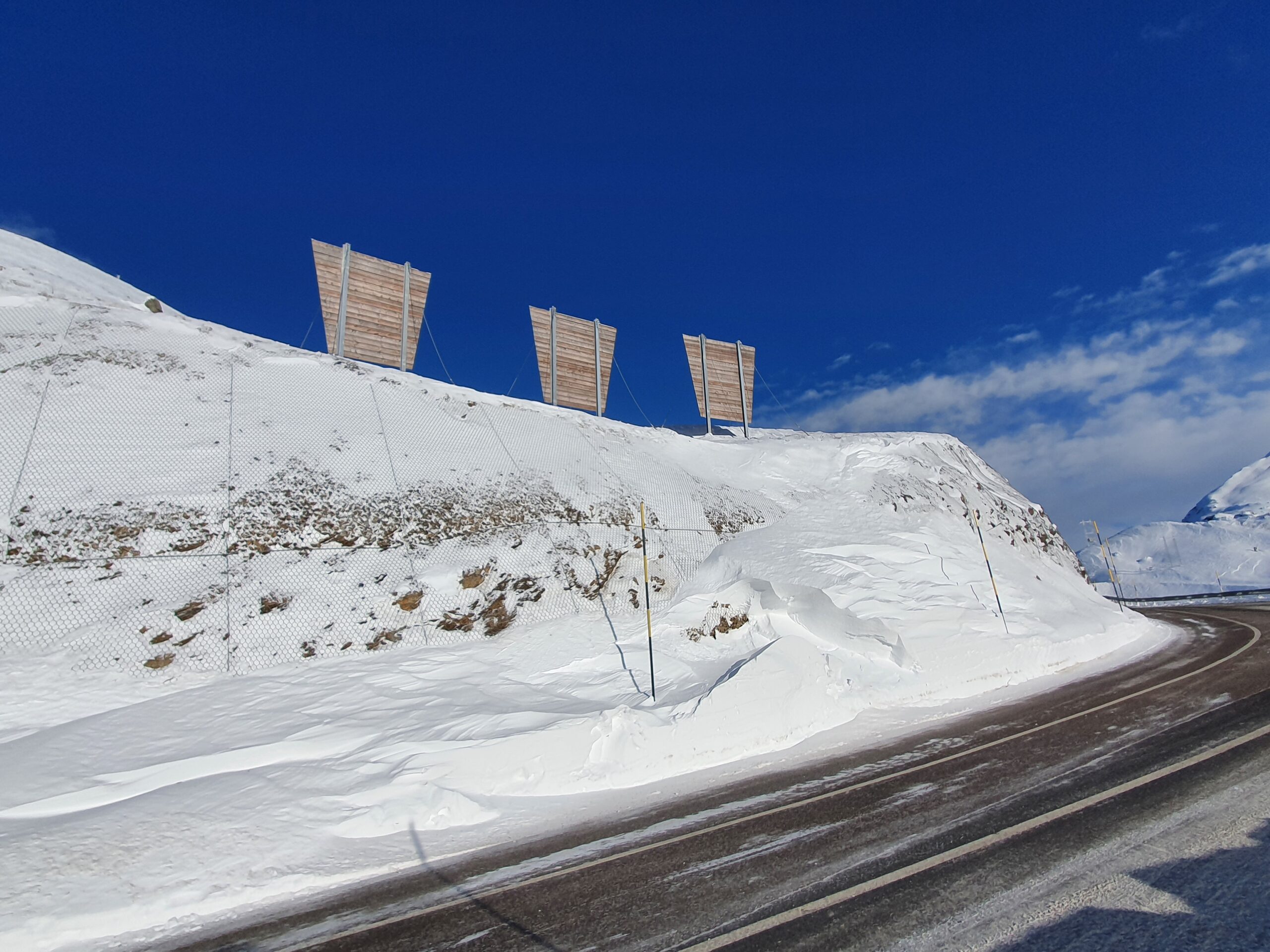
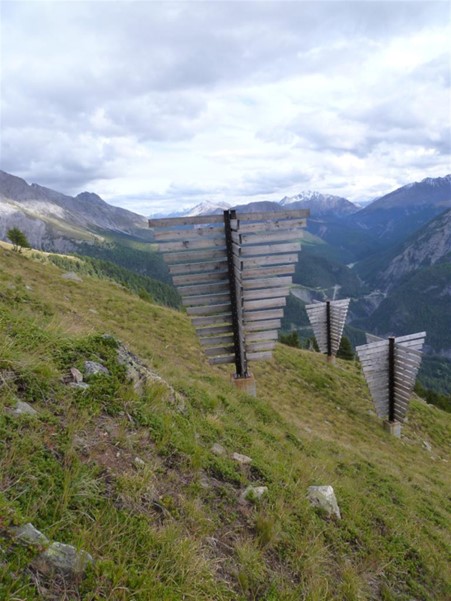
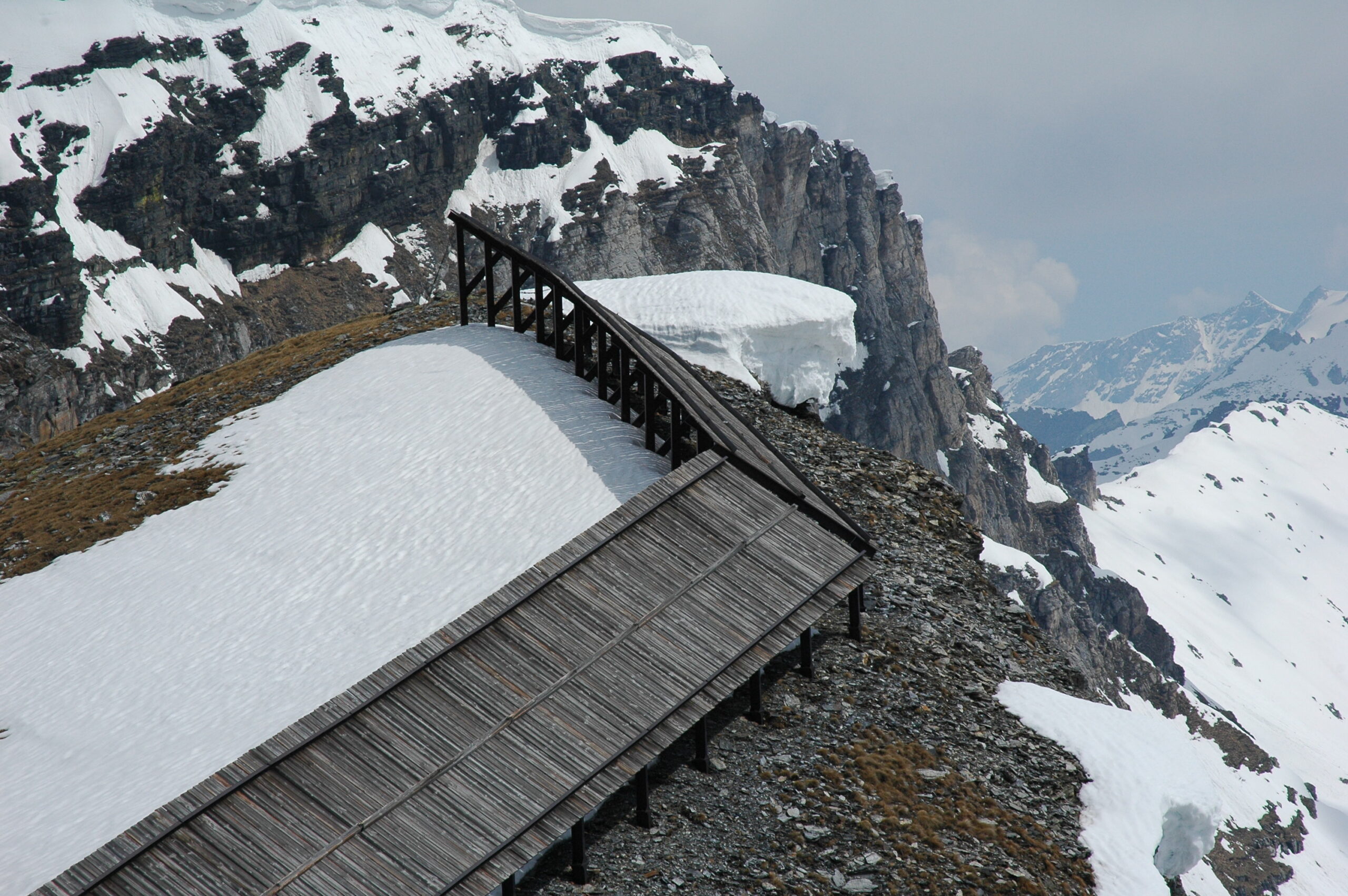
Snowdrift control structures
Targeted control of snow drift by influencing wind patterns, resulting in a more favorable distribution of snow masses—for example, redirecting them toward flatter terrain.
Snowdrift fences: Reduction of snow deposition in release areas.
Wind baffles / scour crosses: targeted snow erosion (scour formation) in the area of the wind baffles to increased wind speeds and the resulting minimization of cornice formation.
Wind roofs: Better distribution of snow in the release area due to increased wind speeds.
Limits:
Effectiveness is guaranteed only under wind directions adapted to the system, except potentially in the case of scour crosses.
Simple monitoring/control:
Monitoring/control of the snow deposit and thus its functionality and correct positioning in the field. Monitoring/control for damage to the individual structures.
02.2 Active permanent structural measures - avalanche flow path
Actively permanent measures, which occur in the area of the flow path of avalanches (track / transport zone), can be divided into two different functional groups. One group is the transverse defense structures (catching or retarding of avalanches), and the second group is the deflection and transition structures (Rudolf-Miklau & Sauermoser, 2011).
Transverse defense structures (catching or retarding of avalanches)
Targeted collection of the snow masses or the slowing down of the snow masses and the resulting shortening of the run-offs. This group of measures has a particular effect on dense flow avalanches and only partially powder snow avalanches.
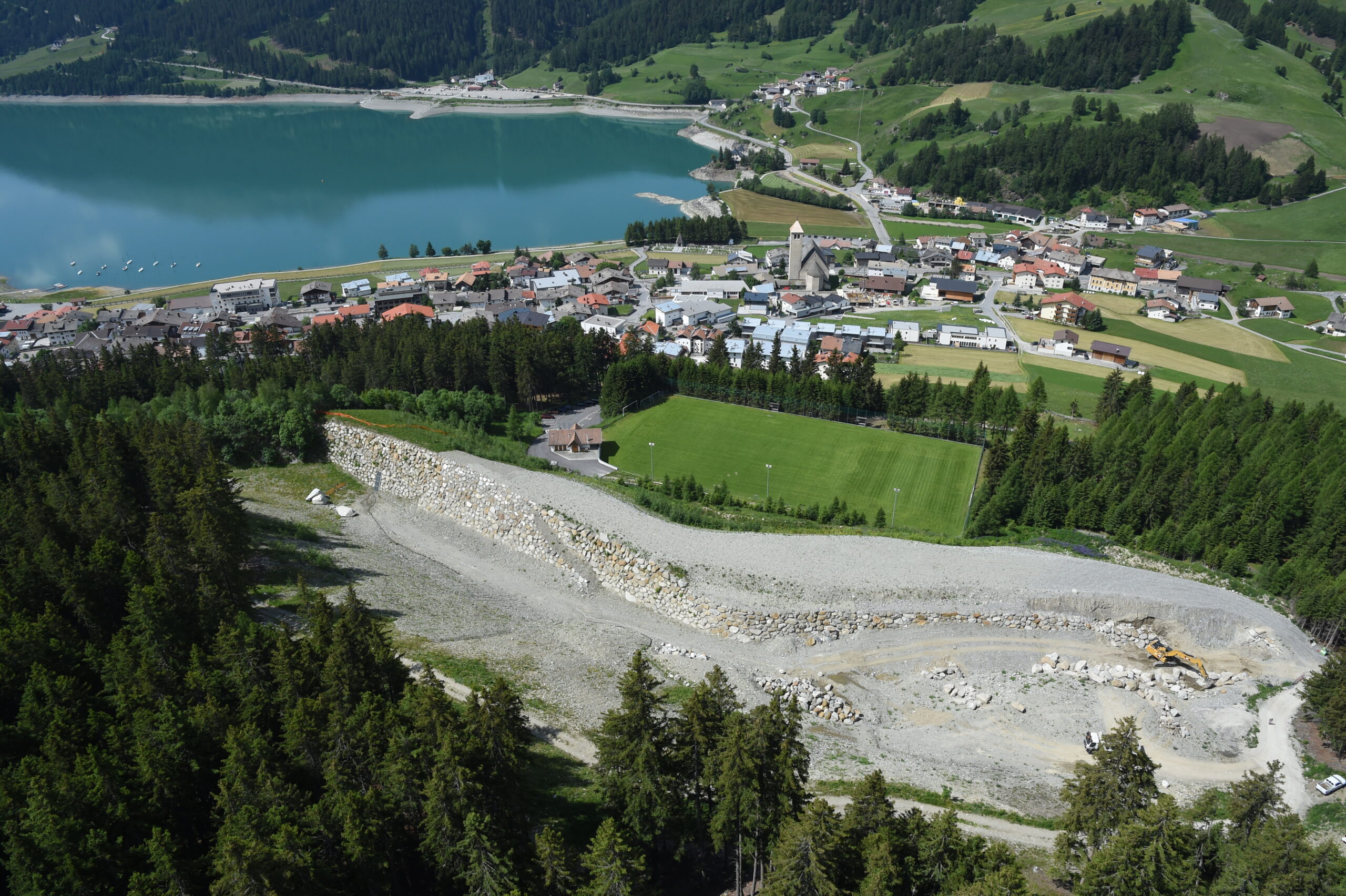
Avalanche dam: earth-filled dam, possibly built in combination with masonry
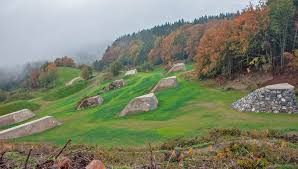
Avalanche-retarding cones: earth-filled mounds, possibly constructed in combination with mansory; effectivness only achieved when used in groups.
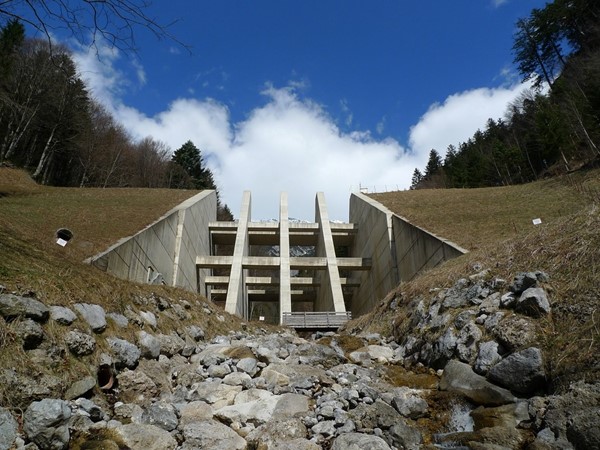
Avalanche breaker: Reinforced concrete construction with a protective effect on power flow part of avalanches.
Limits:
Protective effect given up to a defined design event. Severely limited protective effect against powder cloud avalanches.
Simple monitoring/control:
Particular attention must be paid to the filling of the retention area (e.g., the ‘storage space’ behind a dam) of the structures by pre-avalanches.
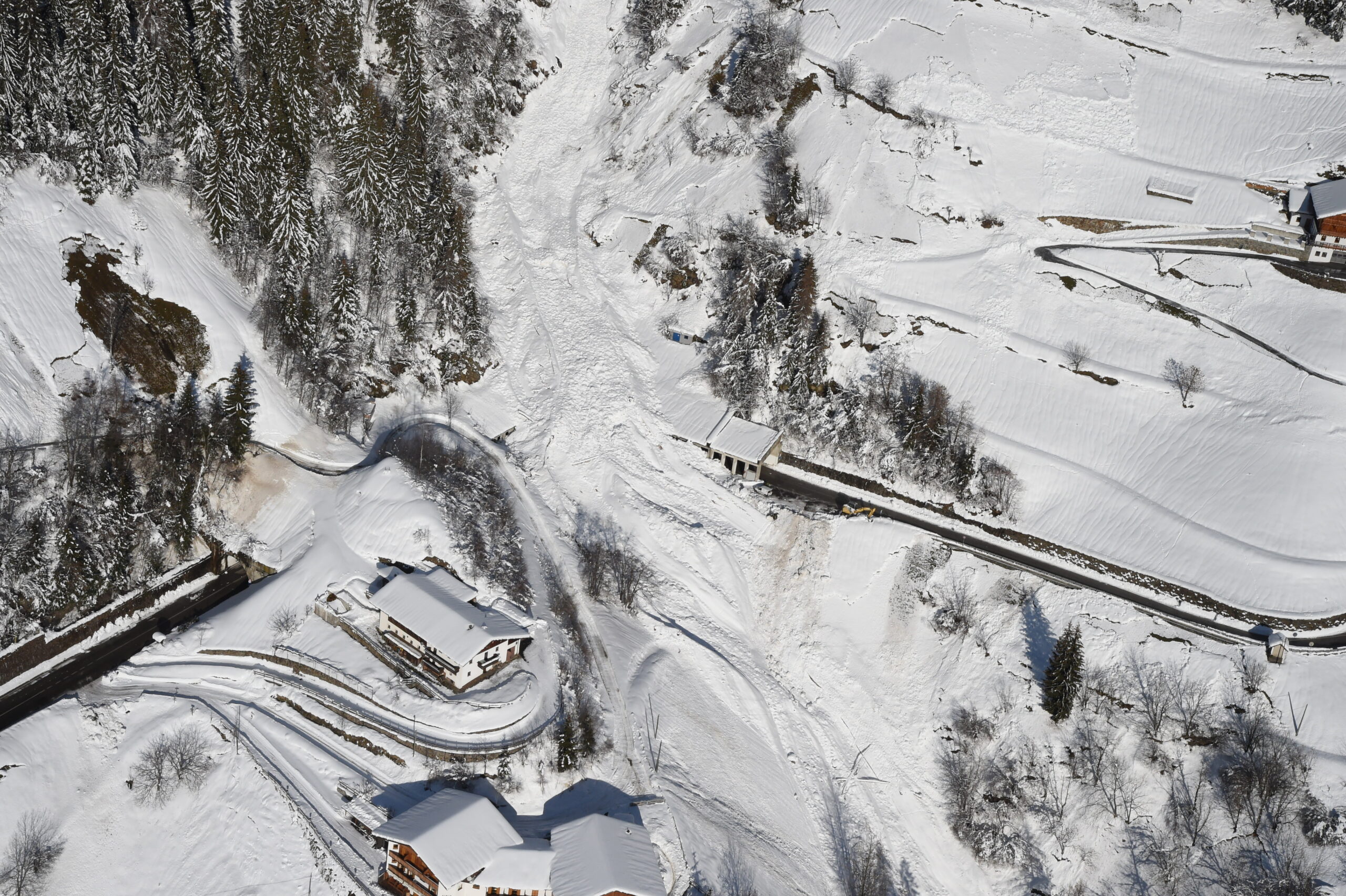
Deflection structures and transition structures
Deflecting, directing or transferring snow masses from the objects to be protected by means of dams, walls or reinforced concrete structures.
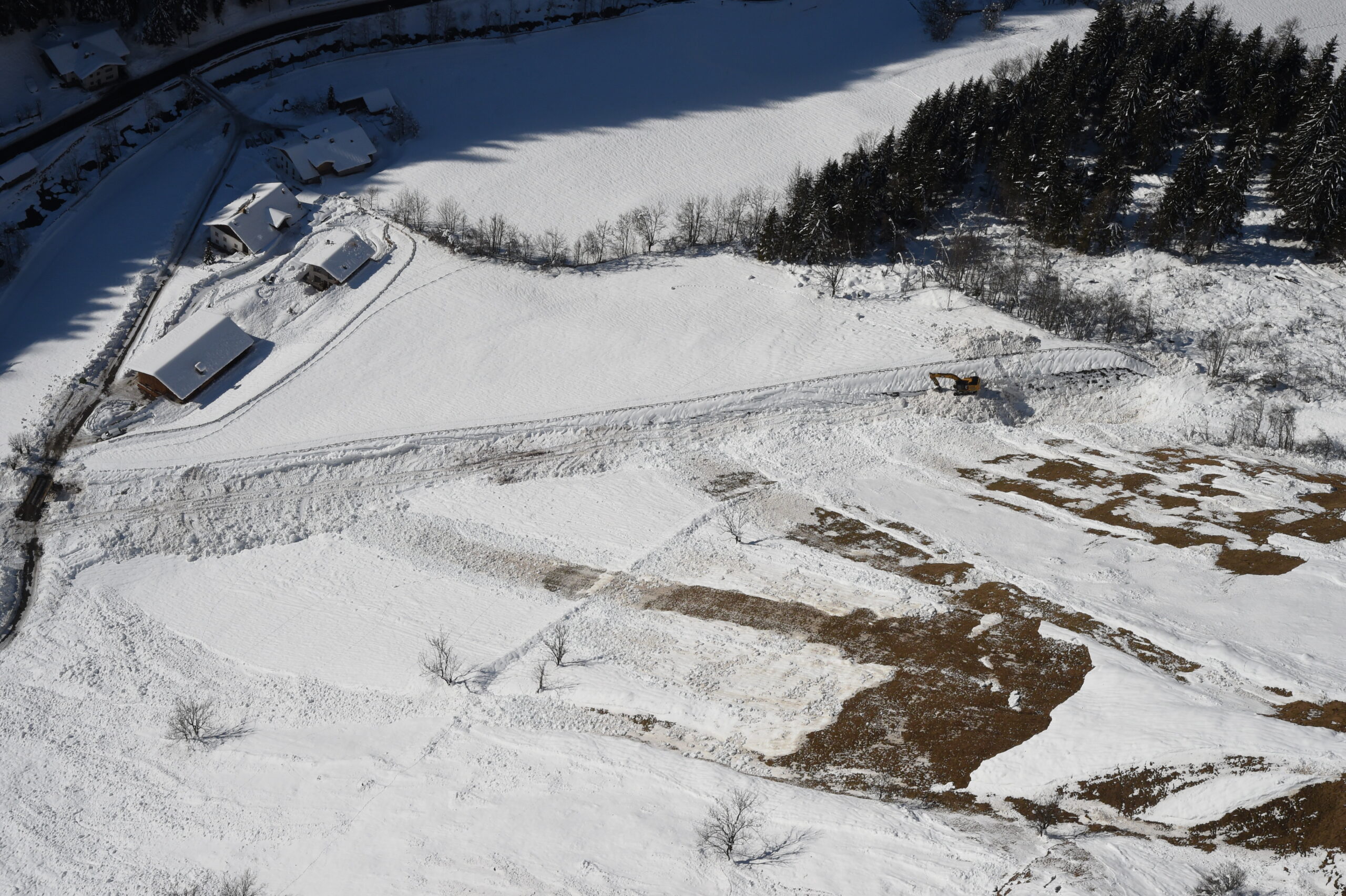
Deflection dams: are intended to prevent avalanches from spreading laterally or changing direction – especially where steep gullies merge into flatter valley areas (Rudolf-Miklau & Sauermoser).
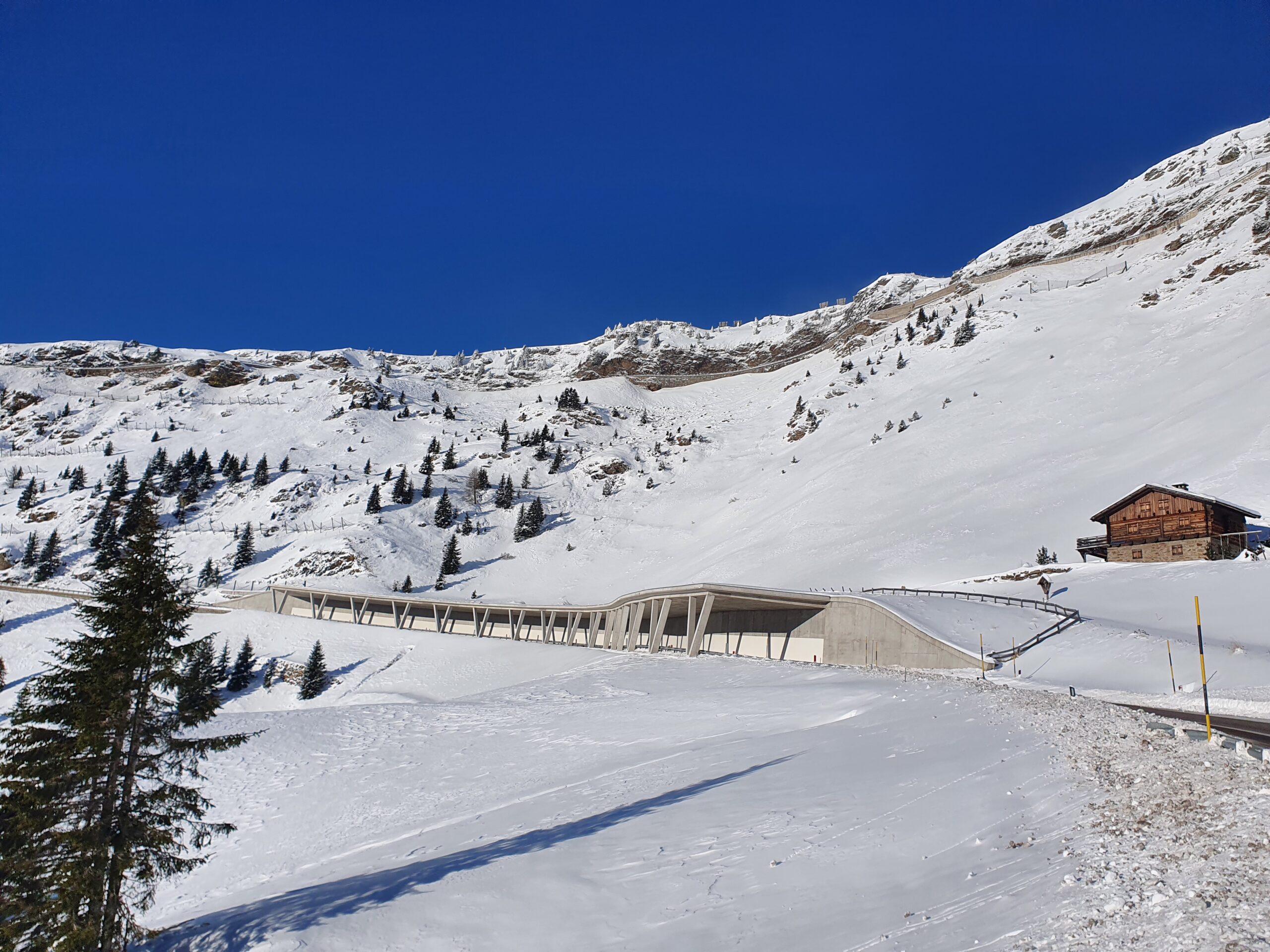
Avalanche gallery: Reinforced concrete construction with opening on the valley side, especially for the protection of roads; snow masses flow over the gallery
Avalanche tunnels: tunnel construction especially for the protection of roads; Masses of snow flood over the tunnel
Limits:
Similar requirements apply to deflection and transition structures for the described group of transverse defense structures.
In the case of avalanche galleries and tunnels, the entrances and exits are considered particularly endangered – because during extreme events, large avalanches can flood over the structures there laterally.
Easy monitoring/control:
In the case of avalanche galleries and tunnels, general inspection of the condition of the structure.
03
Passive permanent structural measures
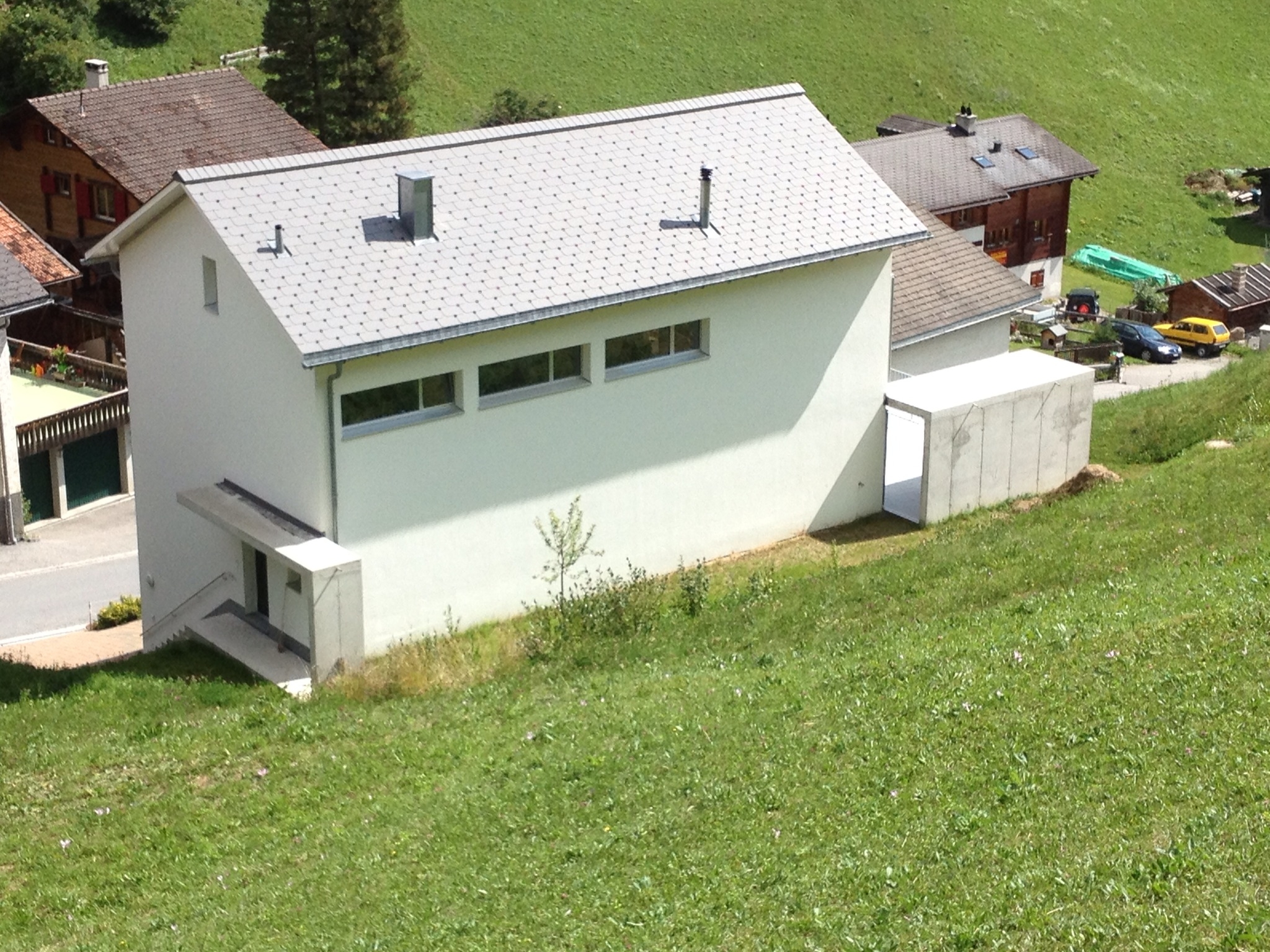
Passive permanent structural measures can also be referred to as object protection measures, as they are constructed directly at the object to be protected.
- Location and shape of the buildings: Architectural measures such as no windows on the avalanche side, no overhanging roofs, reinforced walls in reinforced concrete or similar materials.
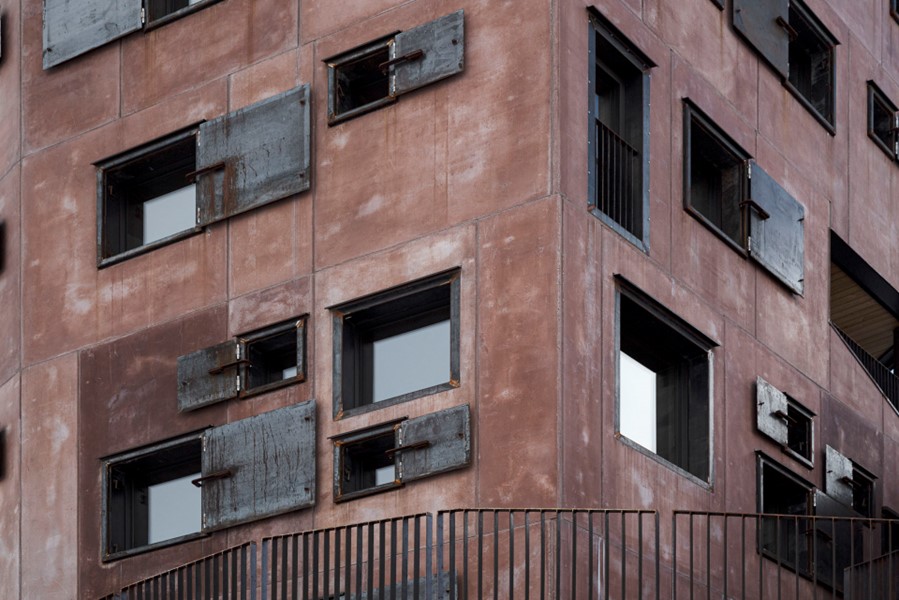
Avalanche windows/covers: shutters or covers designed to withstand avalanche pressure; permissible measure in low-risk areas or in buildings without winter use.
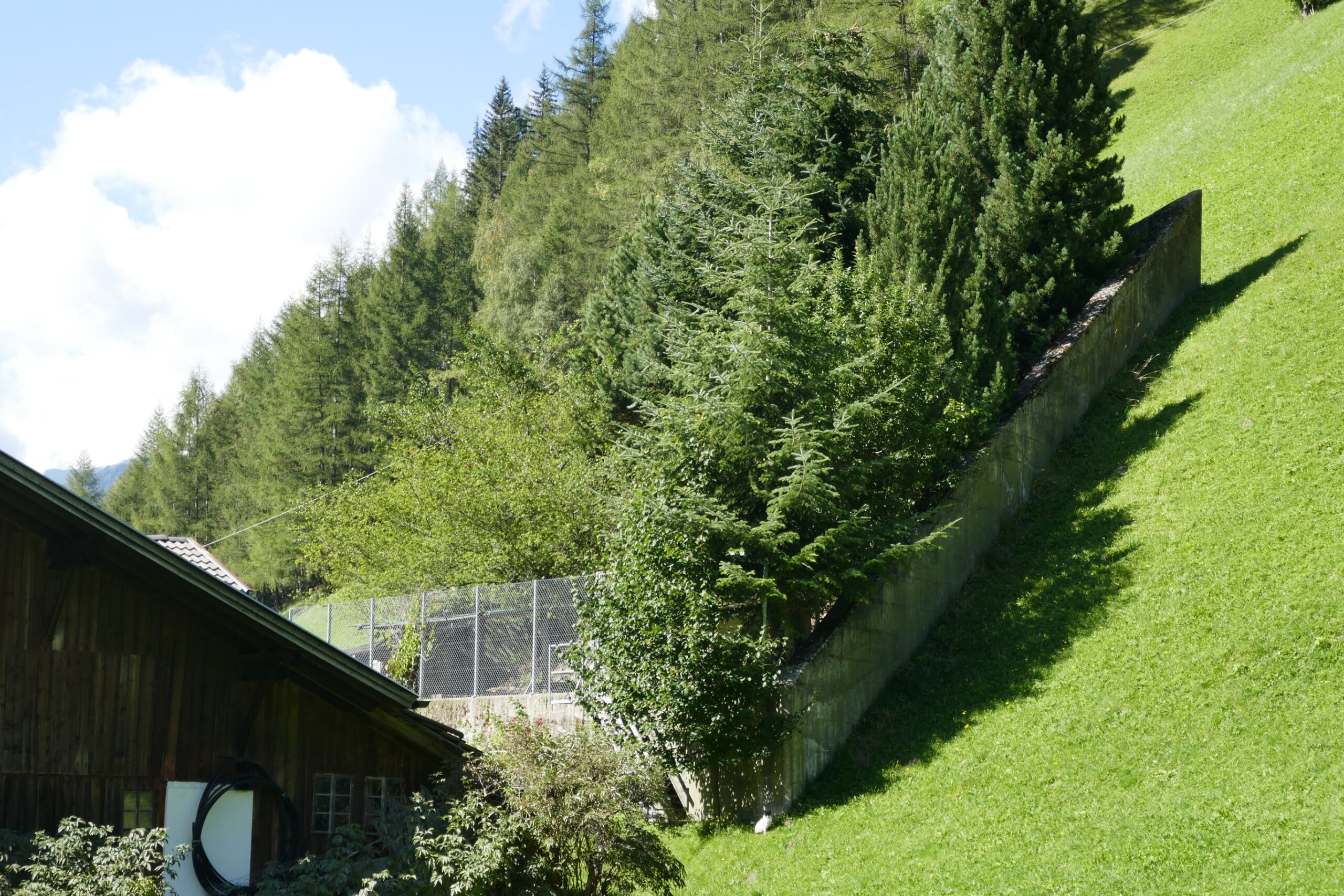
Avalanche wedge/splitting wedge: Splitting wedges made of masonry or reinforced concrete to deflect the avalanche from the building; in agricultural and seasonal buildings; frequently used measures for masts and cable car supports.
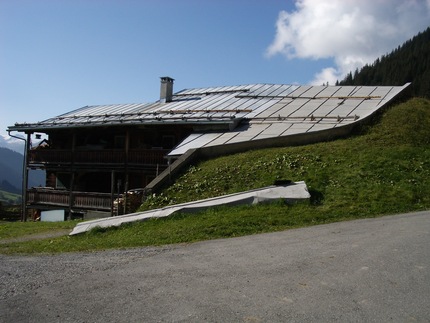
Ebenhöh: mounds of earth piled up on the avalanche side to enable avalanches to flow over and around buildings; seamless connection to the roof.
Impact wall: directly on buildings or masonry made of reinforced concrete and/or stone set off from them.
Limits:
Protective effectiveness is ensured up to a defined design event. Partial protection is provided against powder avalanches. Avalanche windows and covers must be closed or installed separately and therefore constitute temporary measures.
Easy monitoring/control:
Filling level control; Checking for the presence of the measure (general condition); Deformations and damage (e.g. rock fall) and the resulting reduced level of effect.
Cover Picture: Snow steel bridges above the Pfelders ski area © Lukas Ruetz | snow institute